

podcast episode
195
minute listen
Audio Recording:
Podcast: Play in new window | Download (Duration: 25:32 — 35.1MB)
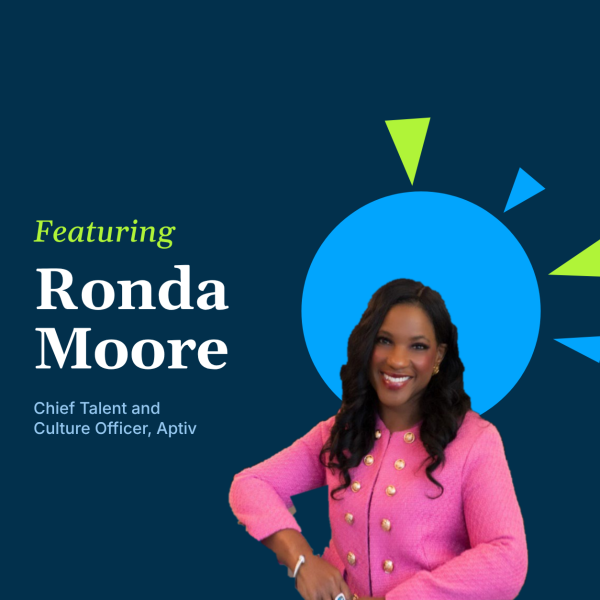
AI can write the report, analyze the data and build the deck in minutes. What it can’t do is own the decision, read the room or earn a team’s trust. In this episode, BreAnne Okoren and Joe Folkman talk with Ronda Moore, Chief Talent and Culture Officer at Aptiv, about what happens to the human side of leadership as technology gets smarter.
Ronda explains why judgment, coaching, curiosity and trust matter more now than they used to. She shares how Aptiv is using the time AI gives back to invest in its people. That includes AI coaching-practice agents for managers, a “manager meetup” community, and an AI tool that turns skills assessment results into personalized 70-20-10 development plans. She also covers what it takes to keep trust during big changes, starting with being willing to say “I don’t know yet.”
Ronda Bazley Moore is Chief Talent and Culture Officer at Aptiv. There she leads global initiatives that speed up workforce transformation, strengthen a high-performance culture and align talent priorities with the company’s strategy. She is an award-winning executive with more than two decades of experience and has held leadership roles at Accenture, Bank of America, Deloitte, IBM and LexisNexis. Her expertise spans executive and leadership development, coaching, performance management, organizational design and employee experience. She is a champion of inclusive leadership, committed to building cultures where people thrive and reach their full potential.
Welcome to 90th Percentile Leadership, Insights Backed by Data. I’m BreAnne Okoren I’m joined by my co-host and leading psychometrician Joe Folkman. We’ve spent a lot of time talking about what AI is going to change in the workplace. But today we’re asking a different question. As technology is getting smarter, what happens to the human side of leadership? AI can generate reports, it can analyze complex information.
And complete tasks that used to take employees hours or even days to do. But it can’t replace the responsibility leaders have to develop people, build trust, exercise good judgment, and help their teams grow. So our guest today is Ronda Moore, Chief Talent and Culture Officer at Aptive, a global technology company helping shape the future of mobility. Ronda brings extensive experience in talent development and organizational leadership.
And she’s actively working on how organizations can prepare their people for an AI-driven future. So, Ronda, welcome to the podcast today. Thank you for having me. It’s a pleasure to be here. Ronda, you’ve spent your career developing talent and helping organizations prepare for change. As AI takes more analytical and executional work.
What do you believe is the human advantage and which leadership capabilities become more important, not less? Yeah, it’s a great question. I think Brienne summed it up really nicely in the intro to this call. so to me, the human advantage is really about understanding what matters most. To Brienne’s point, AI, exceptional, extraordinary at producing analyses.
Creating summaries of things, first drafts, options. But what AI can’t do is own the decision. It can’t read the room, right? Those things that we can do as humans, it can’t have empathy, and it cannot earn the trust that develops followership and really creates the environment for people to be successful. so I I agree that the human advantage.
Are the very things that are uniquely human, especially as we’re working with eyes. So things become more important like judgment, coaching, curiosity, and the ability to build trust. And I think to the degree that individuals, regardless of the stage of career that they’re in, are able to develop those capabilities. Again, judgment, curiosity, coaching.
trust we’re we’re going to see those leaders truly be exceptional. Ronda, you’re a you’re in an organization that’s this isn’t new to you guys. I mean you you’ve had robots forever, right? That’s exactly right. You’ve lived with the technology. So I I think you guys know more than most people about
What is going to be the impact of AI? And so yeah, I I think you’re a you’re really an expert here. Yeah. Joe, I appreciate you acknowledging that. You’re right. At Active, our mission is delivering innovative solutions that people trust when it matters most. And we understand at Aptive that it’s not just about delivering technology. It is very much about being able to win the trust of the customers that we have the privilege of.
of serving. And so we believe that trust matters more than ever because people will only take the risk that change requires if they trust the people delivering those innovations. And active has worked very hard throughout its history to earn that trust. So it’s the people, not the technology. That’s Or the people delivering the technology. Yeah. Yeah. Absolutely. Absolutely.
I think we’ve all been surprised with how fast AI has improved. I mean, just a few years ago, I just remember listening to some things and testing out and being like, no, no, no, my job’s safe. This isn’t that good. And then it feels like every few months with these updates, it’s like, no, it’s getting better. It’s getting better. There is kind of fears are growing, especially in the past few months with certain things that have come to light.
but I love the idea of looking at okay, yeah, this technology is fantastic and look what we can do with it, but there still is that human side that’s so important that cannot be replaced. And we had spoken earlier, we had a conversation. You mentioned how AI is changing the nature of work and employees who once, you know, spent all this time doing one thing are now have this opportunity.
to with this time that’s given them to shift their focus maybe right and and instead of analyzing reports forever we have a new opportunity to do different things it’s exactly right Brienne I remember you know as as I you know kind of started using AI and even as team members were starting to deliver content and deliverables to me
using AI, I literally saw like years of my life just flash in front of my eyes. I thought about like the hours and hours I built spending content or analyzing a report or building the perfect deck, right? as a consultant or as a human performance analyst. And I realized that as a leader, my job was changing.
Right. So as people for for a few reasons, right? As the people who, again, I had the privilege of serving were starting to worry and wonder about what their value was, as the types of things they were doing, analysis, developing, and delivering content could be done so easily, almost instantaneously, started to worry about their job. There was a real role that I had to play as a leader, as a coach to help them understand that.
We had to shift our relationship with the content. And so it wasn’t just about you doing the work. It was about understanding why the work mattered. It was about asking questions about what the implications of the report were. It was about you role playing with me and helping me think about what were some questions I might anticipate.
And what this is really important would make this even better. You know, AI can deliver all of this content. AI can never own the consequence, right? Because I can also tell you like the the you know embarrassment of taking, you know, work into a meeting, you know, that seemed beautiful, but right underneath it.
You understand that there was some judgment that hadn’t been applied. or there was a deeper level of analysis that had not been done. And AI was not in the room with me, right? To to feel the shame. Right. and in that case, the stakes, you know, were not as high. It was just a matter of kind of pride there. but you understand like how important.
it becomes to truly have that judgment and that curiosity and that deeper level of analysis because you understand that you have to sit with the count consequence and you are accountable even if AI is used to do the work. It’s true. Occasionally it hallucinates, right? So
Yeah. Less and less now, to be fair. Less and less. but it it it still it still happens. It still happens. Ronda, you’re a great coach. you have some real skills there. I’m I mean, these are this is part of your job. But when you look at your managers, your supervisors, are they do they have that coaching skill? I I mean, and
what
What can you do to help them become better coaches? Because that’s I mean, AI does the routine work now, right? And so somebody needs to coach and somebody needs to support and somebody needs to recognize and AI’s not great at doing that. So how did how have you helped managers become better coaches? So in my seat, this is actually an opportunity for me now because for years.
When we talk to leaders about the importance of coaching, the importance of providing feedback, the importance of holding teams accountable and giving them you know solid information to lift their level of performance, you you hear a couple of things, right? I don’t know how to do it. I don’t have time to do it, I’m not comfortable doing it. And AI has given many of us, I’d say, more capacity.
And so I would say that the manager’s value now is shifting from checking to work to really developing the person that’s doing it, including ourselves, right? Yeah. And including the people that we have the, the, the privilege of leading. And I love, Joe, about your research and what you’ve shown us for years that leaders who are strong coaches are going to have more commitment from their teams. They’re going to have better attrition rates with their.
their team or they’re going to have better retention rates with their team and their people are going to just go the extra mile for them. And we think about performance and the disruption and all of the innovation, we need that commitment from teams and that higher level of performance more than ever. And so coaching becomes a real differentiator. And it just so happens that it’s at this point now that we’ve got more capacity to
do it.
So I think a couple of things that we’re doing at AppDov. One, we’re trying to make it simple, right? Giving managers some simple questions that they can work with and even helping build out AI agents, right? That they can practice having coaching conversations with, right? as we’re thinking about performance reviews, how might you use Copilot, for example?
To craft really good feedback. So we’re we’re using that. And now you have that manager who would have written a review that was, you know, yay long, now able to think and respond and critique an output like, yeah, that’s exactly what I meant. and so now they can practice and think more about delivering it. So I think that that’s been wonderful. We also see that.
With many people having more capacity, people are also desiring to be in community more. And so we’re using forums, we call it our manager meetup series, where we’re bringing managers together in safe envir environments and giving them a chance to practice and to learn from each other as we think about raising the bar. because there there is a loneliness, right, that can come.
when you’re able to do work so quickly, just you and the machine, right? and maybe you’re not collaborating with others as much. And so being able to combat that and collaborate through community forums like our manager meetup series has meant so much. And as as people are dealing with really tough questions like, will my job go away? How do I use this ethically? Was
You know, how how do I talk to my team who are afraid? all of all of those things can can be, I think, managed with really well in in community.
we’re thinking about how do we reallocate resources and the time that people have. So how do we, for example, help our HR business partners or my talent acquisition team become more strategic and partnering with the business because now they’re not spending as much time.
writing requisitions because we’ve got great you know, AI generated templates that can help us do that. Right. And so now we’re able to have regular meetings and we’re able to have conversations about how is the footprint for the business changing? And what ways are we seeing challenges in the market with recruiting certain types of talent and how can we be having
regular one-on-one conversations with talent magnets in the business to build pipelines. And that has made a huge difference in the satisfaction that recruiters, for example, feel in their jobs by being able to deliver work that is more strategic and relational. One of the great skills that people need to be a good coach is they need to listen. And
We’re crappy listeners. And I think our attention span has gotten less with AI. I mean, we you know, we’ve copied, copy, copy again. Yes. And as people develop that skill, I think it really gonna help them be better coaches. So and in addition to listening to Lat say be curious, yeah. Right, and you can imagine that when the answer is so readily available, they’re
It in some ways we maybe will ask more questions, or in some ways we maybe truly don’t have the question because we know the answer already exists, right? But I think this idea of of of listening to learn. and again, AI can never be human. And so what what we’re talking about is truly being curious about our each other. Right. About each other, not just about facts and information.
Right, but truly wanting to know the people that we work with, truly wanting to understand what motivates them, how they are feeling after they deliver something, right? I can I can’t go to to to co-pilot and and and and do a retrospective after seeing one of my team members deliver a great presentation, but I can absolutely have a conversation with them and ask them to tell me, how do you think that went?
What would you do differently next time? How could I have supported you more? And so truly being curious about how our teams are doing, how they are performing, what they need from us, and then how they’re perceiving us and experiencing us as leaders, I think is one of the most important things. And we can only learn that by listening to them and by asking them the questions.
After we had our initial conversation, I was just so moved by how much you and your team looked at AI as this opportunity to take this time and and technology and invest it now in people and in helping them. And I just that’s why I really wanted to talk to you about like this human side of like, okay, yeah, managers did. We were so there was so much.
Time that was they didn’t have, but now instead of doing more and more work, maybe we can take this and use that time for others. One of the most interesting things you shared was how you’re experimenting, you said, with AI tools to help employees create personalized development plans using a 70 2010 approach. So I’m curious about how that how does that work in practice and how do you make AI supported development plans?
You know, lead to that meaningful learning and the conversations and the listening that we’ve been talking about. Yeah, thanks, Brienne, for calling that out. And I enjoyed our first conversation so much. So it is true. So earlier in the year, we conducted what we call an enterprise skills assessment at ABDA. So we identified approximately 10 enterprise people skills that
every person at our organization needs, regardless of their role. And we deliberately tied them to our values. So for example, as we consider the value of think and act like an owners, we consider things like customer insights, problem solving, business acumen, financial acumen, or strategic decisions. Under our value of one team, we might
consider enterprise skills such as communication or collaboration and learning agility and our value of like play-to-win might be around operational excellence and digital fluency. And across those 10 enterprise skills, we gave our colleagues the opportunity to to rate themselves and their proficiency level and and how well they did this. So not quite a a a 360, but we then
Later asked managers to validate those proficiency skill levels. And we learned from that. And we saw that we had employees who really had some gaps in what they were calling around business acumen. And that made sense, right? Because we’re going through a business transformation where we’re thinking much more beyond.
Automotive, which is the industry lane that we’ve played in for years. And we’re thinking about other strategic strategic verticals like aerospace and defense or telecommunications, for example. And so employees at this point are kind of curious about how they can grow skills and information business acumen, especially in some of these areas. And so we created a really simple agent. And I wish I could say that that I did it.
I didn’t do it. I have like the best team in the world, but members of my team connected. And they used what we know to be true about good development plans. They asked or wrote prompts that would give employees the opportunity to kind of share the results of this enterprise skills assessment. We provided what the definition of those skills were.
They were able to upload their results. And we asked AI to create development plans that included learning experiences, ways that they could develop their network, what some on-the-job experiences might be. And we asked AI to help to develop some developmental goals.
related to these. And what we saw coming out of that were one, people who maybe never were methodical in developing development plans before, now having a real tool where they could do that. And where we couldn’t sit down, my talent team limited with every individual in the organization and create a high quality development plan. We were now able to scale what a conversation with the talent
practitioner might be like to help them identify some development goals and some development activities that they could do to help them you know learn, build a network, have take on different experiences. And the the development plans that resulted were much more robust than we would have seen otherwise. And we’re excited to see at the end of the year how
those proficiency levels change. We’re tracking in a couple of different areas those proficiency levels because again, we said across the enterprise, these are the pin that matter to the future of Active and to anybody who is going to grow their career here. And so we have a baseline. And now with this tool, we’ll be able to see for people who develop those development plans and actually follow through
How did their proficiency level change? So it’s exciting to see what will happen. And I’d love to come back and tell you more about the results as we score those again at the end of the year. You know, one of the things is AI starts moving in and the organization’s changing, the trust starts to be impacted, right? And people.
you know as as we researched trust we found that it was a combination of relationships consistency and expertise and you know way has tons of expertise but you know i it’s pretty consistent but the relationship
part is where it falls down. I I mean, and and people need relationships and they need people. So have you seen some issues around trust that have bubbled up? And w have you addressed that and and what are some of the things you can do to kind of help f fix some of those things? Yeah. You know, the the thing about trust is that I I find that when we
really understand our values, personal and the organizational values, and we anchor in those. We all have a common language, we all have you know, a commonality around what drives us when we understand our mission, we can understand that we’re all really in this for the same thing. And I think that that helps. and that is key to maintaining trust. I think that as leaders, especially
leaders that are navigating significant change and and find me a leader who is not that telling the truth about what you know and what you do not know is so important and as a leader it can be very humbling you know to say the words I don’t know yet right and and and so having that vulnerability to to to truly just be honest that you don’t know yet.
Or maybe it is, I can’t say yet. Right. it means everything to your team and is so much better in building trust than saying things that are not true or saying things that are misleading. And I think that people can handle uncertainty, but they they can’t handle, you know, and don’t appreciate being lied to or
Or or surprised, right? I think that’s where trust really starts to erode. and and again, this goes back to the this piece of genuinely caring about the people that you have the privilege of leading. And I think that if you demonstrate that trust or that curiosity that we talked about earlier, right? Getting to know people, really thinking about what
their potential is and what their goals are and how can you enable that as someone who supports and sponsors them. And how can you help them live into their fullest potential by creating opportunities, giving them honest and timely, fruitful feedback that they can follow through on. I think those are trust building activities, right? When you think about it, because the person is able to see that like, wow, they’re delivering tough messages to me.
They’re stretching me in ways that I didn’t know I could perform. And that that endears a lot of trust, I find, from the team. and then I think consistency, right? when I was a young consultant, we we had a saying that you underpromise and over-deliver, right? And having this work ethic of consistently.
Doing what you say you’re going to do. If you say that you’ll deliver something by a certain date, do it. And there’s a chance that you may not be, you know, really clear as soon as you know that you won’t and and have a plan to quickly get things back on track. So, you know, having again that transparency and and consistency.
and strong delivery, I think are things that we all do to maintain trust. But above all of that, being connected to individuals as people. Yeah. Yeah. Ronda, we have so many talent development leaders who listen to this podcast. And I know they the feedback we’ve gotten as we’ve had different individuals from various industries come and share what they’re doing is always so helpful. So thank you for
going into all the different types of development and things you’re trying and and how you’re utilizing the technology in good and responsible ways to help your people. Cause in the end, like it is, it’s about it’s about people. We don’t want to be replaced. And I just loved I just loved hearing that from you.
One of my biggest takeaways from this conversation is that AI doesn’t eliminate the need for great leadership. It raises the expectations of what great leadership needs to accomplish and can accomplish. And so thank you so much for for coming and and being with us today.
Thank you. Absolutely. Thank you to everyone listening to the 90th percentile insights backed by data. We’ll see you next week.
Upcoming Event
DEC
15
2026
Virtual Workshop
9:30am - 11:00am MT
Give yourself the gift of development as you prepare to thrive in 2027. Join us for a special holiday edition of Coachability and discover how becoming more receptive to feedback can help you unlock your potential and get more out of every development opportunity.